15 Years of Magnetic 3D Cell Culture: From Magnetic Levitation to FDA-Endorsed NAMs

Fifteen years ago, the concept of magnetic 3D cell culture (M3D) was introduced in Nature Nanotechnology (Souza et al. 2010, DOI: 10.1038/nnano.2010.23). At the time, researchers were exploring ways to overcome the limitations of traditional 2D systems, which often failed to replicate the complexity of living tissues. Magnetic levitation offered a novel, scaffold-free approach to creating 3D tissue-like structures—by magnetizing cells with biocompatible nanoparticles, researchers could guide assembly while cells naturally produced their own extracellular matrix (ECM), without animal-derived matrices.
This technology emerged as researchers sought alternatives to 2D limitations, envisioning a future where physiologically relevant in vitro models would become indispensable for drug discovery, cancer research, and tissue engineering. Whether generating spheroids, organoids, or organotypic cultures, the focus has always been on what truly matters: creating models that predict in vivo biology—from drug efficacy and toxicity in humans to stem cell differentiation and organogenesis.
Fast forward to 2025, and the FDA now recognizes New Approach Methodologies (NAMs), with 3D cell culture at their core, as alternatives to animal testing. This milestone reflects the collective progress of the scientific community and the growing importance of innovative models in advancing drug development.
A Timeline of Progress
-
2010: Magnetic levitation introduced in petri dishes - proof of concept without the need for exogenous ECM or adherence to surfaces. At the time, options for non-adherent cell culture were limited, with few alternatives like ultra-low attachment (ULA) plates.
-
6/24-well plates: Enabled scalability, supporting early screening applications and the formation of more complex tissue models, from simple spheroids to multi-cellular organotypic structures.
-
96-well plates: Supported high-throughput screening, reducing reagent use while increasing experimental capacity for drug efficacy and toxicity studies.
-
384-well plates: Miniaturized for ultra-high-throughput applications, enabling consistent spheroid and organoid formation.
-
1536-well plates (today): Achieved unprecedented throughput, allowing thousands of samples, hundreds of replicates, and dozens of controls, ideal for drug discovery.
From Petri Dishes to FDA-Endorsed NAMs
Over the years, the technology scaled from 15 mm petri dishes to 1536-well plates, enabling ultra-high-throughput screening with minimal reagent use. This scalability allowed researchers to run more replicas, include more controls, and achieve statistically stronger results. The terminology has evolved—spheroids, organoids, organotypic cultures—but the goal remains constant: developing models that accurately predict human biology. Today, 3D cell culture is recognized as a cornerstone of NAMs, endorsed by the FDA as an alternative to animal testing for monoclonal antibody preclinical studies.
A Shared Journey of Progress
The real story isn't just about the technology—it's about what it has enabled. From advancing cancer research to supporting drug discovery pipelines, magnetic 3D cell culture has empowered scientists to ask bigger questions and find better answers. Whether studying drug efficacy, stem cell differentiation, organogenesis, or human toxicity, the method has proven its value in generating predictive data. The FDA's recent guidance on NAMs is a testament to how far the field has come, and it's a milestone we share with the entire scientific community.
Magnetic 3D cell culture (M3D) can stand alone or integrate seamlessly with other 3D techniques, such as bioprinting or microfluidics, to make experiments easier, more reproducible, higher throughput, and faster. It is compatible with a variety of surfaces, including matrix-based hydrogels (e.g., Matrigel, collagen) and round-bottom or cell-repellent plates, offering flexibility for diverse experimental needs. This versatility allows M3D to deliver better data and better results, whether used independently or in combination with other methods.
Why It Matters: Building More Predictive Models
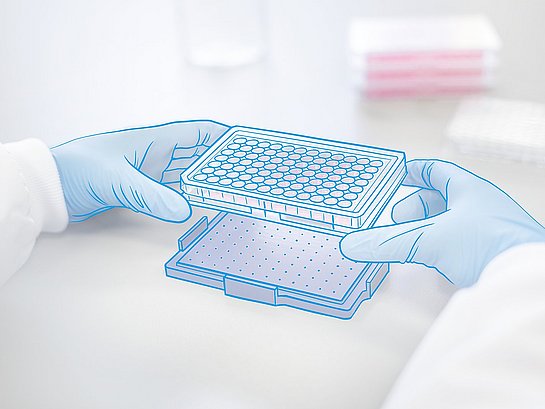
The evolution to high-density formats is critical because it empowers researchers to build more predictive models of human biology. This scalability provides three key advantages:
-
Human-Relevant Insights: Generating data that aligns with FDA guidance on New Approach Methodologies (NAMs) creates more predictive models, reducing reliance on animal testing and accelerating therapies to the clinic.
-
Statistically Stronger Data: The ability to run extensive replicates and controls improves the reliability of experimental data, strengthening confidence in the predictive outcomes.
-
Accelerated, Cost-Effective Discovery: Miniaturizing experiments reduces per-sample reagent costs, enabling larger, more comprehensive screens that accelerate the discovery pipeline.
Read the full blog (with comparison images from our publications) to explore the journey and its impact: https://focus.gbo.com/blog/3d/tag/3dcc-in-drug-discovery-screening
Access the original 2010 study: https://doi.org/10.1038/nnano.2010.23
