Coagulation and Collection Plus: a Spotlight on Digital Innovation with Dr. Jaime Noguez
The Scoop - No.3, August 2025 - A Greiner Bio-One Newsletter
Introducing: Inside the tube - Coagulation Edition
We’re excited to launch a new series in The Scoop called Inside the Tube: your go-to guide for understanding the science behind the blood collection tubes we use every day. Each edition will spotlight a different tube type, exploring its additives, and specific purpose in laboratory testing.
The series will follow the recommended order of draw, helping you gain an understanding of how proper tube sequencing supports accurate results and prevents cross-contamination. Whether you’re in the lab or supporting it, this series will give you a clearer view of what happens after the draw and why each tube matters.
The Order of Draw:
1. Blood Culture Bottles

2. Coagulation Tubes
are collected second. These tubes are highly sensitive to contamination from other additives such as EDTA, which can chelate calcium — an essential component in the coagulation cascade — resulting in falsely prolonged clotting times in tests like prothrombin time (PT) and activated partial thromboplastin time (aPTT) [1]. Serum tubes with clot activators can also interfere with coagulation testing and should not precede coagulation tubes.

3. Serum Tubes

4. Heparin Tubes

5. EDTA Tubes

6. Glycolytic Inhibitor Tubes
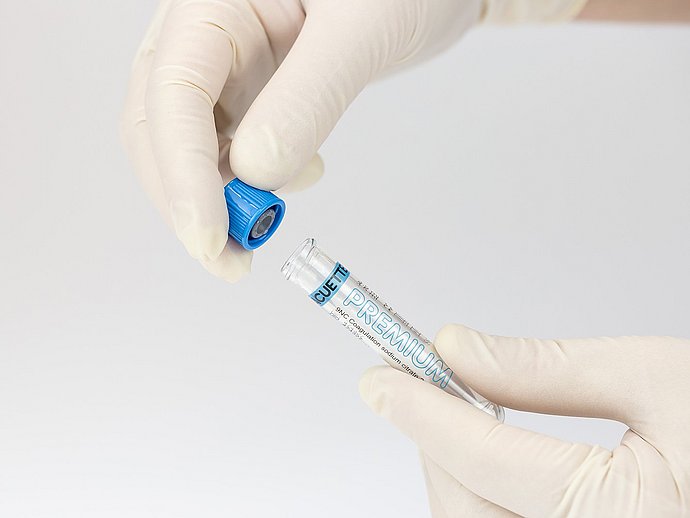
Coagulation tubes uncapped - sodium citrate explained
WHY IS THIS TUBE DRAWN FIRST?
These tubes are highly sensitive to contamination from additives like EDTA and clot activators.
For more information, refer to The Scoop, Edition 2: “Sequence for Success".
PURPOSE:
Coagulation Tubes are used to collect blood samples for testing how well a patient’s blood clots.
INSIDE THE TUBE:
Additive:
Coagulation Tubes are filled with either 3.2 % (0.109 M) or 3.8 % (0.129 M) buffered trisodium citrate.
How does it work?
Citrate works by chelating (grabbing and locking up) calcium ions, like a magnet picking up metal. Since calcium is needed for every step of clot formation, this stops the clotting process in the tube and keeps the sample in a liquid state for testing.
Proper mixing is critical:
For accurate results, ensure tubes are inverted as recommended. Please refer to your country specific Instructions for Use (IFU) for the correct number of inversions.
What is buffered trisodium citrate solution?
Trisodium citrate is a salt that prevents blood from clotting by binding to calcium, which is essential for the clotting process.
Why the 9:1 ratio matters:
Laboratory standards [2] [3] require one part citrate to nine parts blood (a 9:1 blood to additive ratio).
Underfilling can lead to:
- Falsey prolonged clotting times (PT/INR, aPTT) [4].
- Incorrect assumption that the patient is over-anticoagulated.
- Risk of under treatment, increasing the chance of dangerous clots.
How to interpret the fill volume?
Adequate fill volume for light blue cap tubes is represented by the region within the black arrow.[5]

SOURCES
- Cornes M, van Dongen-Lases E, Grankvist K, Ibarz M, Kristensen G, Lippi G, et al. Order of blood draw: Opinion paper by the European Federation for Clinical Chemistry and Laboratory Medicine (EFLM) Working Group for the PREANALYTICAL phase (WG-Pre). Clinical Chemistry and Laboratory Medicine (CCLM). 2017 Jul;55(1):27–31. doi:10.1515/cclm-2016-0426
- International Organization for Standardization (ISO). ISO 6710:2017: Single-use containers for human venous blood specimen collection. Geneva, Switzerland: ISO, 2017.
- CLSI. Collection, Transport, and Processing of Blood Specimens for Testing Plasma-Based Coagulation Assays. 6th ed. CLSI guideline H21. Clinical and Laboratory Standards Institute; 2024.
- Center for Phlebotomy Education. What Every Phlebotomist Must Know About Drawing Coags. Available at: www.phlebotomy.com/phlebotomyblog/what-every-phlebotomist-must-know-about-drawing-coags.html. Accessed June 30, 2025.
- Handling Recommendations: VACUETTE® Coagulation Tube. Poster – Info.
A syringe slip-up
A published case[6] in the Journal of Laboratory Physicians brought attention to how improper sample collection techniques can significantly alter coagulation test results. In this case, a patient showed unexpected, elevated PT/INR values, which conflicted with the clinical picture. The cause? The sample had been collected using a syringe containing heparin, which lead to prolonged coagulation times.
LESSON LEARNED:
- Proper collection devices and strict adherence are essential to avoid contamination.
SOURCES
6. Mahto M, Kumar V, Banerjee A, Kumar S, Kumar A. Pre-analytical errors in coagulation testing: a case series. Diagnosis. 2024;11(1):114-9. doi:10.1515/dx-2023-0110.
Dr. Jaime Noguez:

Dr. Jaime Noguez, PhD, DABCC, is a leader in clinical pathology, serving as Associate Professor of Pathology at Case Western Reserve University School of Medicine and Section Head of Clinical Chemistry, Toxicology, and Diagnostic Immunology at University Hospitals Cleveland Medical Center. As Medical Director of Clinical Chemistry & Toxicology, she has led the development of advanced lab tests and championed patient safety and diagnostic innovation.
A strong advocate for health equity and STEM education, Dr. Noguez is especially passionate about empowering young girls and minority women in science. She actively mentors high school and college students, helping to cultivate the next generation of diverse leaders in laboratory medicine.
In a recent episode of the Greiner Bio-One Talks podcast, Dr. Noguez shared her insights on improving lab workflows through digital tools, automation, and AI. She discussed how innovations like real-time tracking and smart sample management can reduce errors and improve patient care.
HEAR FROM DR. JAIME NOGUEZ ON GREINER BIO-ONE TALKS

Join us as we host Dr. Jaime Noguez, section head of clinical chemistry at UH Cleveland, discussing digital solutions, automation, and AI in preanalytics. Discover what makes a great phlebotomist from her professional and personal experience in this insightful episode.