Experts @ Greiner Bio-One: Ana-Maria Šimundić
At Greiner Bio-One, scientific expertise is more than a claim — it’s part of our daily work. In this portrait series, we introduce the experts behind our solutions, share authentic insights into their fields, and show how research turns into products that create real value for our customers.
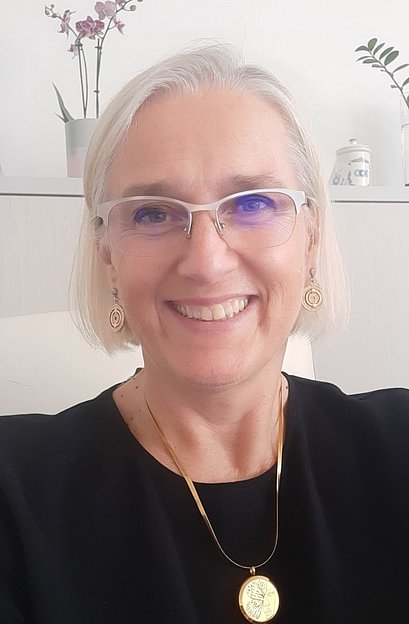
This time in focus:
Ana-Maria Šimundić
... is Director Global Medical & Clinical Affairs at Greiner Bio-One and is based in Zagreb, Croatia. Since joining the company in December 2023, she has brought extensive expertise in quality management, the preanalytical phase, error detection, patient safety, hemolysis, and ISO 15189 accreditation. With more than 200 publications in indexed journals, she is also widely recognized internationally for her contribution to laboratory medicine.
About Ana-Maria Šimundić
| Name | Ana-Maria Šimundić |
| Nationality | Croatian |
| Position at Greiner Bio-One | Director Global Medical & Clinial Affairs |
| Department | Global Department Medical & Clinial Affairs |
| Location | Zagreb, Croatia |
| Date of hiring | December 1st 2023 |
| Specializations (research…) | Quality management, Preanalytical phase, error detection, patient safety, hemolysis, ISO 15189 accreditation expert |
| Key milestones of career (former positions, advisory boards, memberships…) | Director Global Medical & Clinical Affairs, Greiner Bio-One (2023–present); General Manager, Clinical Hospital Sveti Duh (2022–2023); Head of Medical Laboratory Diagnostics, Clinical Hospital Sveti Duh (2015–2023); Head of Clinical Unit (Biochemistry & Toxicology), Sestre milosrdnice University Hospital (1995–2015); Full Professor, University of Zagreb (since 2003); President, Croatian Society of Medical Biochemists (2012–2018); Editor-in-Chief / Senior Editor, Biochemia Medica (2011–2022); EFLM President / Past President / Executive roles (2011–2023); IFCC Executive Board Member (2021–2023) & Task Force roles (since 2024) |
| Publications (number, topics, links…) | >200 papers in indexed journals |
What is your role at Greiner Bio-One and what are you currently working on?
I serve as Global Director of Medical and Clinical Affairs at Greiner Bio-One, where I am responsible for setting and executing the global medical strategy across the portfolio. My role focuses on ensuring that scientific rigor, clinical relevance, and patient safety are firmly embedded in product innovation, regulatory strategy, and go‑to‑market decisions.
Currently, I am working on strengthening the clinical evidence base supporting our solutions, supporting the organization through the IVDR transition from a medical and clinical perspective, and further maturing the Medical & Clinical Affairs function as a key strategic partner to Regulatory, Quality, R&D, Marketing and Sales teams at GBO.
How did you originally get into this field?
My professional journey has always been driven by a strong focus on the preanalytical phase, which I consider the foundation of quality, safety, and effectiveness in laboratory medicine. Throughout my career in academic medicine and clinical laboratories, I repeatedly saw how errors and inefficiencies upstream directly affect patient outcomes, laboratory workflows, and clinician trust.
Moving into the diagnostics industry, and specifically to Greiner Bio-One, was therefore a very natural step for me. I saw an opportunity to contribute at a broader, more systemic level, where innovation in blood collection and preanalytics can truly make a difference. At GBO, I felt I could have a much greater impact: improving patient safety, simplifying and standardizing laboratory processes, supporting laboratories in addressing daily challenges, and helping them overcome persistent hurdles in the preanalytical phase.
What continues to motivate me is the ability to translate clinical insight into practical solutions that make laboratory life easier and safer, while ultimately improving outcomes for patients.
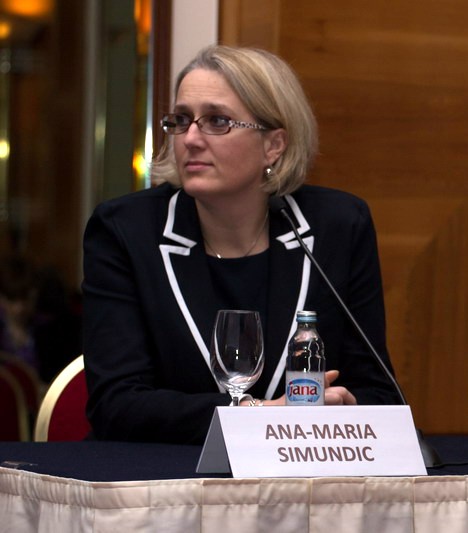
What fascinates you most about your subject area?
At heart, I am a problem‑solver. I am fascinated by understanding how things work, why they fail, and how they can be improved. This mindset naturally drew me to the preanalytical phase, which is, and has always been, the most vulnerable part of the laboratory testing process.
What fascinates me most about preanalytics is precisely this vulnerability: despite its critical importance for patient safety and diagnostic accuracy, many challenges remain unresolved. There are still significant gaps, inefficiencies, and sources of error that affect laboratories every day.
For me, the preanalytical phase represents a space with enormous potential, endless opportunities to improve processes, innovate products, reduce variability, and ultimately make laboratory work safer, simpler, and more reliable. The combination of clinical relevance, real‑world complexity, and the possibility to create tangible impact is what continues to intrigue and motivate me.
What is the central question currently occupying you in your work?
At the core of my work is a very fundamental question: how can we objectively measure and articulate the true value that laboratory medicine brings to healthcare? I am, by nature, evidence‑driven, I like to measure things, understand their impact, and assess their real contribution to outcomes.
Laboratory medicine delivers enormous value to patients and healthcare systems, yet it operates with a remarkably small share of the overall hospital budget. Despite this, the impact of laboratories remains largely invisible, as their contribution is not always directly or immediately linked to patient outcomes in a way that is easily measurable or understood by decision‑makers.
What currently occupies me a lot is finding meaningful, objective ways to quantify this impact, demonstrating how laboratories improve quality of care, enable clinical decision‑making, increase efficiency, and enhance patient safety. I strongly believe that as an industry, we can do much more to support laboratories in making their value visible.
At Greiner Bio‑One, I am therefore focusing on working with some highly distinguished KOL’s to develop objective measures of improvement that laboratories can use to clearly demonstrate their contribution not only to healthcare systems, but also to a society as a whole. The ability to translate laboratory excellence into measurable value is, in my view, one of the most important challenges, and opportunities, facing our field today.
Can you give an example of how your research or expertise is directly incorporated into products or processes at Greiner Bio-One?
One clear example is my work around minimizing blood sample volumes taken from patients, as part of the much broader initiative of Patient Blood Management. From my clinical and academic background, I know that excessive blood collection remains an underrecognized patient safety issue, particularly for vulnerable populations, and that it requires close collaboration between laboratories and industry.
At Greiner Bio-One, my role has been to actively bring this topic to the forefront, raising awareness within laboratories and internally within the organization. Compared to the past, this is now a topic that laboratories openly discuss and actively seek solutions for.
From a product and process perspective, this expertise is directly feeding into how we think about innovation: improving existing products and developing solutions that support laboratories in reducing required sample volumes without compromising analytical quality. Supporting laboratories in this way, through both awareness and product‑level solutions, is a good example of how clinical insight is translated into tangible action at Greiner Bio-One.
What motivates you every day in your work at Greiner Bio-One?
Medical and Clinical Affairs plays a critical role in ensuring scientific credibility, patient safety, and long‑term business success in healthcare organizations. At the same time, its contribution is not always immediately visible, as its impact often spans the entire product lifecycle rather than a single outcome. Increasing this visibility is both a challenge and a strong personal motivation for me.
What motivates me every day at Greiner Bio-One is the opportunity to clearly demonstrate the strategic value that Medical and Clinical Affairs brings to the organization. Medical Affairs strengthens the clinical evidence base, supports innovation and product differentiation, enables regulatory and market access strategies, and builds trusted relationships with laboratories and clinical experts.
My goal is to make this contribution more visible, measurable, and directly connected to business outcomes, including product adoption, sales support, revenue generation, and sustainable company growth. Positioning Medical Affairs as both a scientific authority and a strategic growth enabler, both internally and externally, is a key driver of my work at Greiner Bio-One.
What has been a particular success or “aha” Moment for you at Greiner Bio-One so far?
One of my most important “aha” moments at Greiner Bio-One has been realizing just how strong, competent and capable the people in my team are. Very early on, I was genuinely impressed by their level of expertise, commitment, and professionalism. This recognition, that I am surrounded by highly talented colleagues with whom we can deliver meaningful results together, was a defining “aha” moment for me since joining Greiner Bio-One.
I truly enjoy working with my GMCA team and learning from them every single day.
What changes would you like to see in everyday laboratory work or diagnostics over the next five years?
Over the next five years, I would like to see laboratory medicine more clearly recognized for the value it generates within healthcare systems. Laboratories play a critical role in patient care, clinical decision‑making, and efficiency, yet their contribution is still often underestimated or insufficiently visible.
From an operational perspective, I hope to see a stronger shift toward more sustainable practices, including reduced blood volumes collected from patients, broader adoption of low‑volume collection tubes and stronger shift towards capillary blood collections, and increased attention to patient blood conservation. These changes directly support patient safety while aligning diagnostics with broader sustainability goals.
I also expect and advocate for greater digitalization and automation of laboratory workflows. Many preanalytical and operational processes remain highly manual in many parts of the world, creating unnecessary variability and risk. Expanding digital solutions and automation will be key to improving efficiency, standardization, and quality.
Ultimately, fewer preanalytical errors, smarter use of resources, and better visibility of laboratory value should define the next phase of diagnostic excellence.
What is a common misconception in your field – and what is your view on it?
A common misconception in laboratory medicine is that the preanalytical process is already sufficiently controlled and inherently reliable. In reality, while significant progress has been made, many sources of error in this phase remain underestimated or insufficiently recognized.
In particular, issues such as patient identification errors continue to pose a significant risk to patient safety, yet they are not always visible in routine quality metrics or incident reporting. Because these errors often occur upstream, their impact may only become apparent later in the diagnostic or clinical pathway.
My view is that meaningful improvement in preanalytical safety requires a stronger shift toward digitalization and automation. Manual processes, even when well designed, are inherently vulnerable to variability. By implementing digital systems that automate identification, traceability, and workflow control, we can substantially reduce error risk and increase consistency.
Moving preanalytics toward greater digital integration is not only a technological advancement, it is a necessary step to further strengthen patient safety and build more resilient diagnostic processes.
If you could give one piece of advice to a young scientist or medical professional – what would it be?
My advice would be to stay curious and never stop learning or growing. Science and medicine evolve constantly, and true progress comes from asking questions, challenging assumptions, and remaining open to new ideas.
Thank you very much, Ana-Maria Šimundić, for your daily contribution to making a difference
