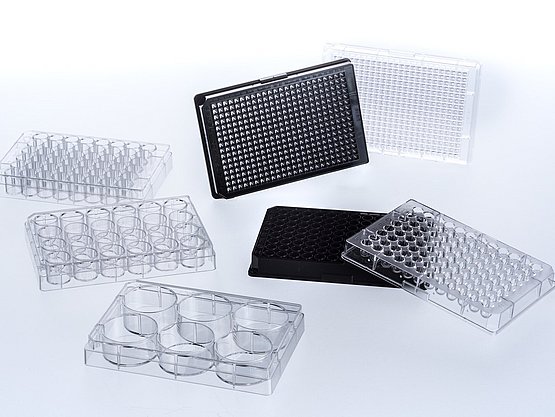
Sophisticated surface solutions
- The right surface for every cell - from ultra-low attachment to biological coatings
- Support strong cell adhesion and proliferation
- Ensure consistency for your biochemical assays - from non- to high-binding surfaces
Poor cell adhesion and unreliable growth are among the most common reasons why cell-based assays fail.
While robust cell lines grow well on standard TC surfaces, more complex or sensitive models often struggle. They require surfaces that better mimic the extracellular matrix.
Typical examples include:
With the right surface, cells attach properly, grow, and behave physiologically — resulting in meaningful data.
From precision injection molding to sophisticated coatings and excellent imaging properties - our microplates deliver measurable benefits across every step of your workflow. Here‘s why so many researchers trust the experts from Greiner Bio-One.
Would you like to stay on this page or do you want to switch to your local website?